
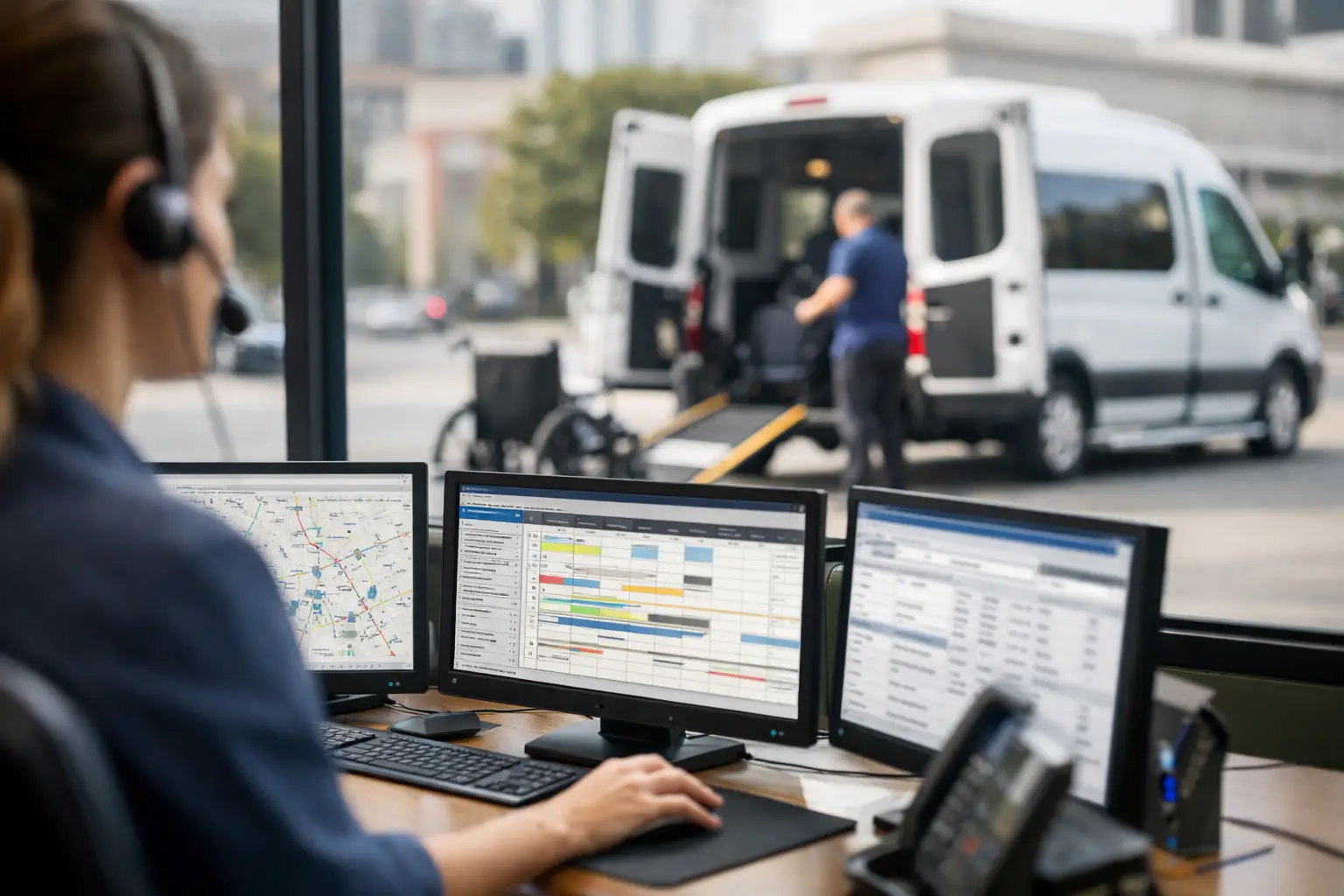
At 5:40 a.m., a dispatcher receives three same-day changes: a dialysis patient is ready early, a wheelchair vehicle has a mechanical issue, and a driver has called out. In a manual operation, that sequence can consume the next hour of phone calls, map checks, and spreadsheet updates. A well-designed NEMT dispatch automation example shows a different operating model: the system identifies affected trips, evaluates qualified vehicles and drivers, proposes viable reassignment options, and records the decision trail for the dispatch team.
The value is not simply faster trip assignment. For a growing NEMT operator, dispatch automation creates a more controlled operating environment across scheduling, driver availability, vehicle capability, patient service requirements, and real-time exceptions. It also establishes the operating discipline that makes a company easier to scale, integrate, or evaluate in a transaction.
What a NEMT Dispatch Automation Example Looks Like
Consider a regional NEMT provider with 55 vehicles, 80 drivers, and a mix of ambulatory, wheelchair, and stretcher trips. The company serves recurring dialysis routes, hospital discharges, medical appointments, and managed care transportation programs across several counties. Dispatchers currently build manifests the evening before, then spend each morning managing late cancellations, no-shows, traffic delays, and driver changes.
The company introduces a dispatch platform connected to its trip intake process, driver application, vehicle data, GPS location feed, and service rules. Each trip includes its pickup and appointment windows, pickup and destination addresses, passenger mobility requirements, attendant status, funding source, and any relevant operational notes. Each vehicle record includes capacity, lift or stretcher capability, service area, inspection status, and current location. Driver records include certification status, work schedule, training requirements, and assigned shift.
When a new trip enters the system, automation does not merely assign the closest vehicle. It first filters the available fleet against non-negotiable requirements. A wheelchair trip cannot be assigned to an ambulatory sedan. A driver whose shift ends before the return leg should not be assigned a trip likely to run late. A vehicle out of service for maintenance should be excluded, even if it appears geographically convenient.
The platform then scores feasible assignments based on the factors the operator defines. Those may include travel time to pickup, on-time performance risk, vehicle utilization, deadhead miles, driver hours, route density, and the ability to protect recurring trips already on the schedule. The dispatcher receives a recommended assignment and retains authority to approve, modify, or override it.
That human review matters. NEMT is a service operation with clinical-adjacent responsibilities, not a pure routing exercise. The best automation reduces repetitive decision work while giving experienced dispatchers clear visibility into the consequences of a change.
From Scheduling to Active Exception Management
The operational benefit becomes clearer after the morning dispatch window begins. In this example, a driver assigned to an early hospital discharge reports a flat tire. The system identifies every downstream trip on that vehicle's manifest, estimates the service impact, and evaluates alternatives using current vehicle locations and trip requirements.
One nearby wheelchair-accessible vehicle can cover the discharge but would create a risk for a later dialysis pickup. Another vehicle can absorb two ambulatory trips with minimal added drive time. The system presents this sequence as a proposed recovery plan. The dispatcher approves the reassignment, pushes revised manifests to the affected drivers, and receives confirmation that each driver has acknowledged the change.
This is where dispatch automation shifts from convenience to operational infrastructure. A manual dispatcher may eventually make the same decisions, but automation shortens the time between disruption and action. It also standardizes the process so that the response does not depend entirely on the experience of one dispatcher working one shift.
For multi-location operators, the platform can also introduce cross-branch visibility. A vehicle in an adjacent service area may be available to protect a high-priority appointment if operating rules and payer requirements permit it. Centralized dispatch oversight makes these decisions visible to leadership rather than leaving each branch to solve problems in isolation.
The Workflow Behind the Recommendation
A reliable recommendation depends on data and operating rules that reflect the real business. The platform needs accurate trip times, clean addresses, vehicle classifications, driver availability, service restrictions, and meaningful status updates from the field. If a driver marks arrival late or fails to update a trip status, the system's view of the operation becomes less reliable.
This creates an important trade-off. An operator can deploy basic automation quickly with current scheduling data, but advanced optimization requires more disciplined inputs. Organizations that skip data governance may see promising routing recommendations that fail under real-world conditions. Organizations that establish consistent trip coding, vehicle standards, and driver workflows can use automation to make more dependable decisions over time.
NEMT Dispatch Automation Requires Operational Rules
Technology should reflect the operator's service model, not force every business into the same template. A company concentrated in recurring dialysis transportation may prioritize route stability and familiar driver-passenger relationships. A discharge-focused provider may prioritize rapid response, hospital-specific pickup procedures, and short-notice capacity. A larger diversified operator may need separate rules by contract, market, vehicle type, or division.
The most effective implementation begins by documenting the rules dispatchers already apply instinctively. Which trips require a specific vehicle type? How much early-arrival buffer is appropriate for different facilities? When can a driver cross into another zone? Which cancellations require immediate outreach? When should a dispatcher intervene rather than accept a system recommendation?
Those rules should be configured, tested against actual historical trips, and reviewed with dispatch, operations, safety, and finance leadership. The goal is not to automate every judgment call. The goal is to make routine decisions faster, repeatable, and auditable while escalating exceptions that require experienced oversight.
A practical rollout often starts with recurring trips and pre-scheduling rather than live, same-day optimization. That allows the operator to validate trip data, compare planned routes against actual performance, and build dispatcher confidence. Once the organization trusts the recommended assignments, it can expand automation into real-time recovery, driver communications, and service-level reporting.
Why Automation Matters for Growth and Integration
For owners considering growth, acquisition, or exit, dispatch automation provides more than a technology story. It can demonstrate that operations are governed through defined processes rather than informal knowledge held by a few employees. That distinction matters when leadership changes, branches are added, or a new corporate platform integrates the business.
A centralized transportation enterprise needs consistent visibility across its operating divisions. Standardized dispatch data can show planned versus actual pickup performance, cancellation patterns, empty miles, driver utilization, vehicle downtime, and the frequency of manual overrides. These metrics support better capital decisions, more targeted training, and clearer accountability at the branch level.
Automation also creates a stronger foundation for safety and compliance. When driver credentials, vehicle inspections, trip documentation, and service requirements are connected to dispatch workflows, the operation can prevent some assignment errors before they reach the road. It does not replace supervision or compliance management, but it gives leadership a more reliable control point.
NextGen Mobility views advanced fleet systems as part of the operating structure required to coordinate specialized transportation at scale. The objective is not technology for its own sake. It is a disciplined digital layer that supports safer execution, more informed management, and stronger integration across transportation businesses.
Measuring Whether the System Is Working
The initial measure should not be whether automation assigns every trip without human involvement. In NEMT, an appropriate override rate can be healthy because dispatchers see patient needs and facility conditions that data may not capture. The better question is whether the organization resolves routine work faster and detects service risk earlier.
Leadership should track on-time pickup and drop-off performance, unassigned-trip exceptions, dispatch response time, deadhead miles, vehicle utilization, late cancellation impact, driver overtime, and manual override reasons. Review these measures by contract, facility, market, and vehicle class. Aggregate averages can hide a weak route, a recurring scheduling issue, or a vehicle category with insufficient capacity.
Over time, the most useful signal may be predictability. When dispatchers begin their shifts with a credible plan, drivers receive clearer instructions, and leaders can see exceptions before they become missed trips, the operation has moved beyond manual coordination toward managed execution.
The right automation program starts with one honest question: where does the dispatch team spend its time correcting preventable uncertainty? Build the workflow around that answer, preserve human judgment where service requires it, and let the operating data guide the next improvement.