
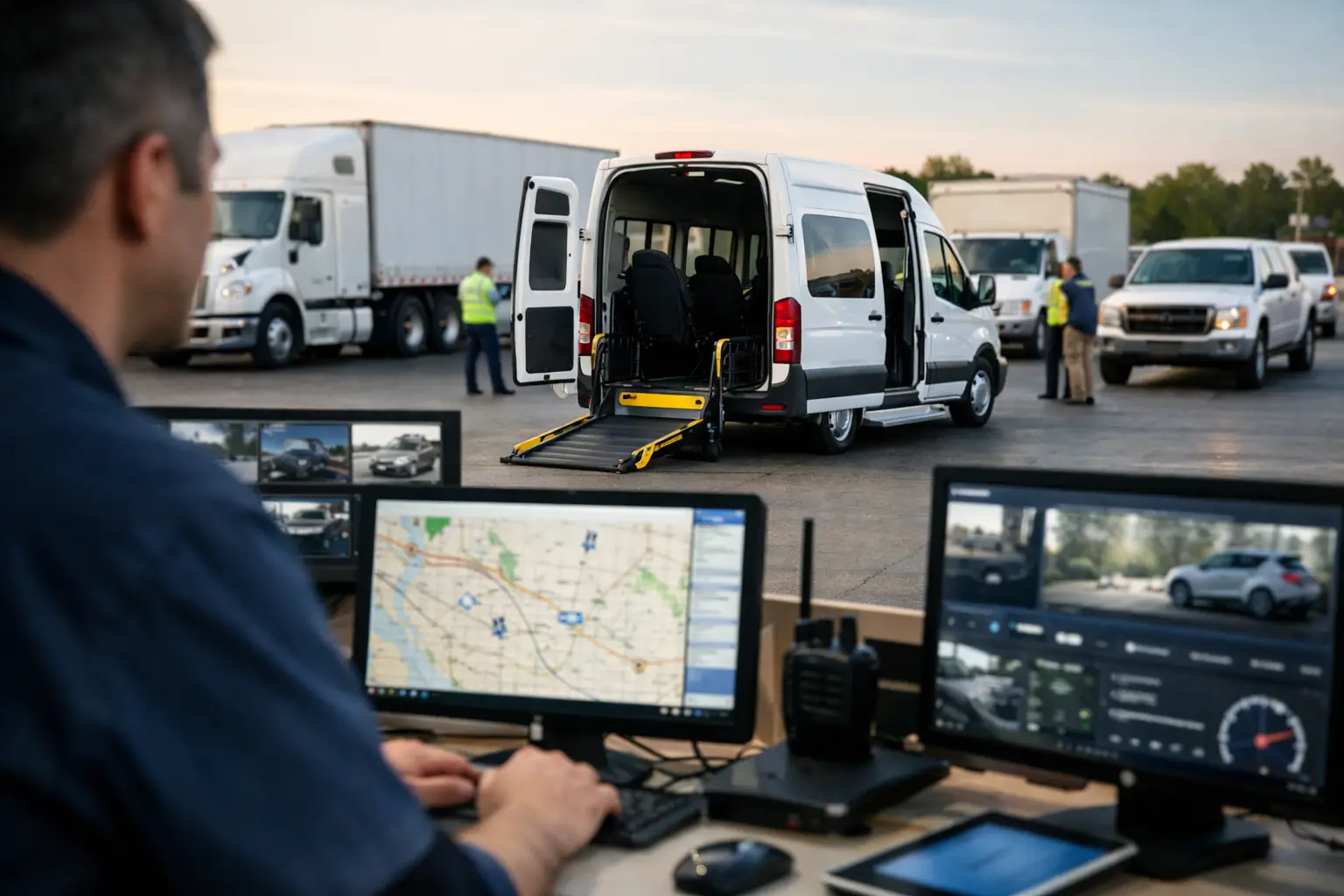
A preventable collision rarely begins at the point of impact. It usually starts earlier: a missed pre-trip inspection, an aggressive turn left unaddressed, a fatigued driver assigned one additional run, or a safety manager working from incomplete information. The best fleet safety systems bring those signals into view early enough for an operator to act. For NEMT and charter transportation businesses, that visibility must support safe passenger movement, regulatory discipline, service continuity, and sound leadership decisions.
A fleet safety platform should not be evaluated as a collection of cameras, alerts, and dashboards. It is operating infrastructure. The right system connects what happens on the road with driver performance, vehicle condition, training records, dispatch decisions, and executive oversight. The wrong system creates more alerts than the organization can review and leaves the underlying risks unresolved.
What the Best Fleet Safety Systems Must Solve
Passenger transportation has a different risk profile than many commercial fleets. A NEMT operator may transport riders who need mobility assistance, time-sensitive medical appointments, or careful transfer support. A charter operator manages longer routes, larger vehicles, varying road conditions, group schedules, and high passenger expectations. In both cases, safety is not confined to driving behavior.
The strongest fleet safety systems create a connected record across the trip lifecycle. They identify risky events, provide enough context to assess what occurred, guide constructive driver intervention, and document the action taken. This matters when an insurer, regulator, customer, or buyer asks not simply whether an incident occurred, but how management identified and addressed risk before it became a pattern.
For an operator considering growth, acquisition, or eventual exit, this structure also has strategic value. A company with documented safety practices, consistent driver coaching, and reliable fleet data is easier to evaluate than one relying on informal judgment and disconnected spreadsheets. Safety performance becomes part of operational credibility.
Build the System Around Risk, Not Features
Many platforms can offer GPS location, cameras, and automated notifications. Those features matter, but the purchase decision should begin with the risks most material to the operation. A charter fleet running interstate routes may prioritize speeding, following distance, lane departure, hours-of-service coordination, and driver fatigue. A NEMT fleet may place greater emphasis on backing events, curbside operations, passenger securement processes, vehicle accessibility checks, and on-time service without rushed driving.
A practical safety architecture generally includes five connected capabilities:
- Video telematics that pairs forward-facing and, where appropriate, driver-facing footage with event data such as hard braking, collision forces, speeding, and distracted driving indicators.
- GPS and vehicle telematics that provide route context, vehicle location, engine fault information, idling patterns, and maintenance triggers.
- Digital inspections and maintenance workflows that turn defects into assigned work, documented repairs, and clear out-of-service decisions.
- Driver scoring and coaching tools that distinguish recurring high-risk behavior from isolated events and retain an audit trail of corrective action.
- Reporting and governance controls that give operations leaders a consistent view of safety trends by driver, vehicle, terminal, division, and operating period.
The value is in the connection between these capabilities. A harsh-braking alert alone may mean little. Video can show whether a driver avoided a sudden hazard. Route data can reveal whether a schedule, traffic pattern, or stop location contributes to repeat events. Coaching records can confirm that management responded proportionately. This is how technology supports informed oversight rather than automatic blame.
Video Telematics: Context Changes the Conversation
Video telematics is often the most visible part of a modern safety program because it changes incident review. Instead of reconstructing an event from a driver statement, a third-party report, and limited vehicle data, managers can assess road conditions, following distance, traffic movement, and the driver’s response.
That context is particularly useful for passenger fleets. A coach operator may need to defend a driver who took appropriate evasive action during a highway incident. A NEMT operator may need to review a backing event near a medical facility where space, pedestrians, and delivery vehicles create repeated exposure. In either setting, video can accelerate review and support fairer outcomes.
There are trade-offs. Driver-facing cameras can improve coaching and reduce distracted-driving exposure, but implementation requires a clear policy, supervisor training, and direct communication with drivers. The purpose should be risk reduction, not constant surveillance. Organizations that introduce cameras without defining event review standards, access controls, and coaching expectations often create resistance that weakens adoption.
Driver Coaching Is the Operating Discipline
A safety system does not improve performance by generating alerts. It improves performance when managers consistently convert meaningful data into timely coaching. That requires a defined process: which events are reviewed, who reviews them, what requires immediate escalation, how drivers can provide context, and when retraining or formal corrective action is warranted.
Coaching should be calibrated to severity and frequency. A single hard-braking event in congested traffic may call for discussion and context. Repeated speeding, phone distraction, or rolling-stop behavior requires a structured response. The objective is to establish measurable expectations while recognizing that driving environments are variable.
Leadership should also monitor the quality of coaching itself. If one location reports very few events while another records frequent risk, the issue may be driver behavior, but it may also be inconsistent review practices. Standardized scorecards, manager training, and periodic audits help ensure the data means the same thing across an enterprise.
Maintenance Data Belongs in the Safety Conversation
Vehicle condition and driver behavior should not be managed in separate systems if avoidable. A safety event involving braking performance, tire condition, lighting, lift equipment, or warning indicators may point to a maintenance concern. Likewise, an inspection that identifies a recurring defect should inform dispatch and vehicle assignment decisions.
Digital driver vehicle inspection reports are most effective when they create accountability after submission. A completed form is not proof that a vehicle is safe. The system should identify defects, assign ownership, record repair status, and prevent a vehicle from returning to service when an out-of-service condition remains open.
For multi-division transportation companies, consistent maintenance workflows are also a governance advantage. They allow leadership to compare compliance and repair turnaround across locations while preserving the operational differences between a coach fleet and an accessible NEMT fleet.
Evaluate Vendors Through Implementation Reality
The best technology will underperform if it does not fit the organization’s vehicles, routes, staffing model, and management capacity. Before selecting a provider, operators should map the daily workflow from vehicle inspection through dispatch, active trip monitoring, event review, repair authorization, and driver follow-up. The goal is to identify where data must move and who must act.
Ask vendors to demonstrate the tasks managers will actually perform, not only the dashboard. Can a supervisor review a high-priority event quickly? Can maintenance staff see open defects without duplicate entry? Can leadership separate performance by division or location? Can the platform retain coaching records and reports needed for insurance, regulatory, or transaction diligence?
Integration deserves particular attention. A system that does not exchange useful information with dispatch, maintenance, payroll, or reporting tools can create manual work that erodes adoption. At the same time, a fully integrated environment is not always necessary for a smaller operator. The appropriate level of integration depends on fleet size, internal resources, and the operational problem being solved.
Measure Safety as a Management System
A mature program tracks more than total collisions. Management should review leading indicators such as speeding frequency, harsh events, unreviewed critical alerts, overdue inspections, open maintenance defects, coaching completion, and repeat events after intervention. These measures show whether risk is being managed before a major claim or service failure occurs.
The metrics should be reviewed at a regular operating cadence, with clear ownership at the driver, location, and leadership levels. Executive reports should remain concise: trend direction, material exposures, actions underway, and unresolved decisions. Detailed event data belongs with the managers responsible for acting on it.
NextGen Mobility views fleet technology as a core part of transportation infrastructure because safe operations depend on coordinated systems, not isolated tools. For operators evaluating technology or preparing their business for a more structured next phase, the most useful question is not which platform has the longest feature list. It is whether the system gives leadership a repeatable way to see risk, act on it, and prove that action was taken.